Thursday, September 17th • 6:00 PM
Cybersecurity in the Age of AI: Defending an Enterprise That Is Changing Faster Than We Can Secure It
Join ISC2 Northern Virginia Chapter for a panel on what it actually takes to defend an enterprise while AI reshapes both sides of the fight. Adversaries are using it to speed up reconnaissance, social engineering, and vulnerability discovery. Defenders are leaning on it for detection, analysis, and response. Meanwhile employees, applications, vendors, and autonomous agents keep introducing AI into the enterprise faster than governance can keep up.
Three senior leaders will work through the calls they are making right now: how much authority to hand AI in the SOC, what shadow AI is already doing inside their environments, and whether existing frameworks still hold.
Hosted by Titan Technologies.
Event Agenda
Location: Capital One, Building C1, Maplewood Hall (Floor 7), 1600 Capital One Drive, McLean, VA 22102 (see venue note below; this is not our usual building)
- 6:00 to 6:30 PM: Check-in and Networking (Food provided, first come, first served)
- 6:30 to 8:00 PM: Chapter Meeting & Presentation
- 8:00 PM onward: Cyber Social Hour at Starr Hill Brewpub at Capital One Center (street level, just across the street from C1), sponsored by Swish
Venue & Directions
New location: we are NOT in our usual building
We are usually in the Capital One building called "C2." For this event we are in a different building called "C1," the large glass building above Ometeo and Stellina Pizzeria. Our room is Maplewood Hall on Floor 7.
Address:
Capital One
1600 Capital One Drive
McLean, VA 22102
Bldg C1 | Maplewood Hall (Floor 7)
C1 Parking: There is a surface parking lot adjacent to C1 for guest parking. If that lot is full, use the usual C2 Garage (1680 Capital One Drive) and walk over, or the Wegmans parking garage beneath The Perch.
Directions to Maplewood Hall: Enter the C1 lobby and proceed past the welcome desk to the elevators. Take an elevator to Floor 7. On Floor 7, head left until you reach the security desk. Maplewood Hall is directly opposite it. If you get lost, just ask security for "C1 Maplewood Hall."
On the map below, the C1 building is the red circle and the surface parking lot is the green square.

Session Abstract
Artificial intelligence is rapidly changing both sides of the cybersecurity equation. Adversaries can use AI to accelerate reconnaissance, social engineering, vulnerability discovery, and attack execution, while defenders are increasingly looking to AI to improve detection, analysis, incident response, vulnerability management, and security operations. At the same time, organizations face a new challenge from within: employees, applications, vendors, and autonomous technologies are introducing AI into the enterprise faster than traditional security and governance models can adapt.
This panel brings together senior technology and cybersecurity leaders to discuss what it actually means to maintain cybersecurity in an AI-driven world. The conversation will explore how AI is changing the threat landscape, where AI can provide meaningful advantages to defenders, the emerging risks of shadow AI and autonomous agents, and how organizations can protect sensitive data without preventing innovation.
The panel will also tackle the harder questions facing today’s cyber leaders: Are our existing security frameworks sufficient for an AI-enabled enterprise? How much authority should we give AI to detect, investigate, and respond to threats? What happens to the traditional SOC as AI assumes more analytical work? And does AI ultimately shift the advantage toward the defender or the attacker?
Rather than focusing on AI hype, this discussion will examine the practical decisions technology and cybersecurity leaders must make today to prepare their organizations for a security environment increasingly shaped by artificial intelligence.
Key Discussion Points
- How AI is changing the threat landscape on both sides, from reconnaissance and social engineering to detection and response
- Where AI gives defenders a real advantage, and where it does not
- Shadow AI and autonomous agents: what is already running inside the enterprise without anyone approving it
- Protecting sensitive data without shutting down innovation
- Whether existing security frameworks are sufficient for an AI-enabled enterprise
- How much authority to give AI to detect, investigate, and respond, and what becomes of the traditional SOC
Featured Panel
Moderator
William (Bill) Webster
Chief Operating Officer and VP of Security Engineering and Architecture, Titan Technologies
Bill Webster brings over 25 years of IT experience to the leadership team at Zen Strategics, now part of Titan Technologies. He served as a Cryptologic Technician for 11 years with the Department of the Navy and in various positions within the National Security Agency. Since 2008 he has developed expertise in software development, data analytics, systems and integration engineering, enterprise administration, security engineering and architecture, DevSecOps, and technical project and program management. Prior to joining Zen he supported Federal clients including DHS, DoD, NSA, DoD Healthcare, and CISA. Zen Strategics recruited Bill as the Technical Program Manager supporting the Department of Education Federal Student Aid Security Operations Center.
Panelist
Davon Tyler
Chief Information Security Officer, Federal Student Aid, U.S. Department of Education
Davon Tyler is the Chief Information Security Officer and Director of the Enterprise Cybersecurity Group for Federal Student Aid at the U.S. Department of Education. His group owns FSA's portion of the Department's FISMA and cybersecurity requirements, safeguarding the data FSA is entrusted with and responding rapidly to cyber threats. He has led FSA's move to a zero trust architecture.
He joined FSA from GSA's Technology Modernization Fund Program Management Office, where he advised GSA and OMB leadership on cyber proposals across the federal government. He previously served as CISO at the United States Mint, in senior positions at the Defense Information Systems Agency, and on active duty in the U.S. Navy. He holds undergraduate and graduate degrees, including an MBA, from University of Maryland Global Campus.
Panelist
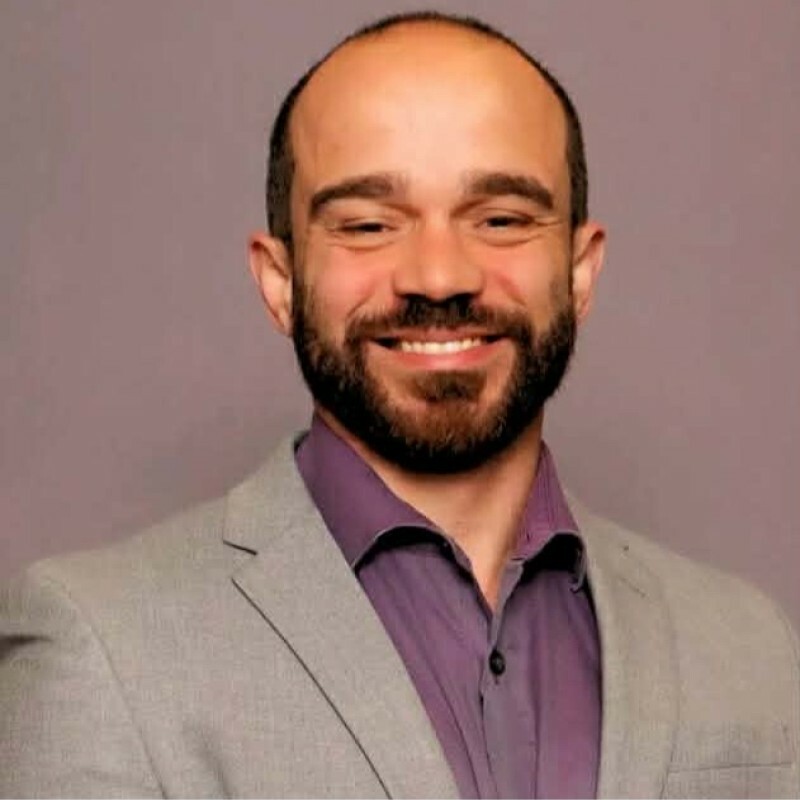
Wayne Rodgers
Federal Senior Solutions Architect, GuidePoint Security
Wayne Rodgers is a Federal Senior Solutions Architect at GuidePoint Security, where he leads cybersecurity architecture, strategic solution design, and technical guidance across the U.S. federal market. He brings 15 years of experience as a cybersecurity leader inside the federal government, with deep expertise in zero trust, network engineering, and technical program management.
Before joining GuidePoint, Wayne was the Zero Trust Lead for the U.S. Department of Education, where he led the implementation and testing of new zero trust capabilities beginning with Secure Access Service Edge and Security Orchestration, Automation and Response. Prior to that he spent more than a decade at the Department of Defense, advancing from network engineer to Technical Lead and Program Manager in Perimeter Defense. He led the congressionally mandated transition of DoD's web-based zero-day detection and mitigation capability from NSA to DISA, and the migration of 1.5 million DoD internet users to DISA's Cloud Based Internet Isolation program. He holds a CISSP and PMP and a B.S. in Computer Networks and Cybersecurity from University of Maryland Global Campus.
We look forward to seeing you there!